

No products in the cart.
Return To Shop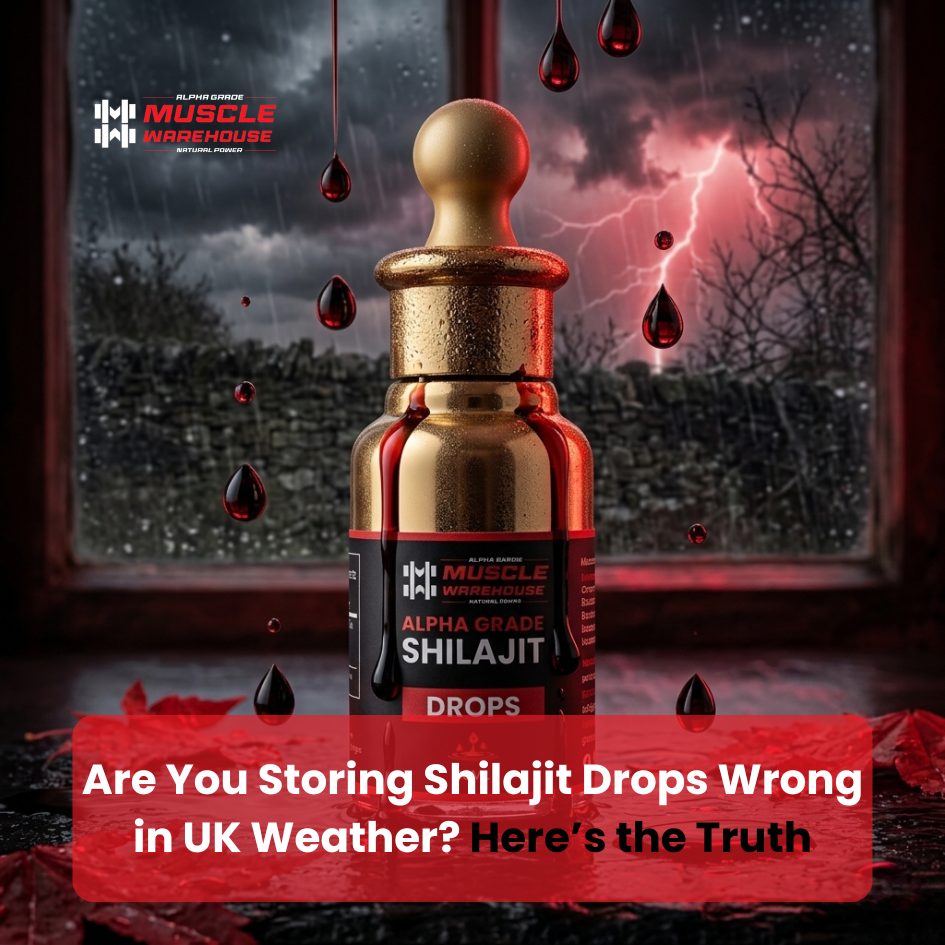
Are You Storing Shilajit Drops Wrong in UK Weather? Here’s the Truth
Are You Storing Pure Shilajit Drops Wrong in UK Weather? This is a critical question because most users do not realise that storage conditions directly control the quality, potency, and effectiveness of Shilajit drops. In the UK, weather conditions are unstable, shifting between cold winters, humid summers, and constantly heated indoor environments.
Because of this, Shilajit storage becomes far more important than people assume. Unlike synthetic supplements, Shilajit is a natural resin rich in fulvic acid, humic substances, and trace minerals. These compounds are sensitive to temperature changes, moisture exposure, oxygen contact, and light exposure.
Moreover, many users unknowingly store it in bathrooms, kitchens, or near heat sources, which gradually damages its structure. As a result, potency drops without visible warning.
Therefore, this guide explains everything in detail so you can store Shilajit Drops correctly in UK weather conditions and maintain full effectiveness for long-term use.
Why UK Weather Affects Shilajit Drops So Strongly
UK weather is one of the most unpredictable climates in Europe. It constantly shifts between damp air, cold winds, indoor heating, and seasonal humidity changes.
Firstly, moisture levels remain high throughout the year. This means even indoor environments can contain enough humidity to affect natural products.
Secondly, heating systems create dry heat during winter, which alters air composition inside homes. As a result, Shilajit stored in unstable environments can slowly degrade.
Moreover, sudden temperature changes between rooms, especially kitchens and hallways, also create instability.
In addition, UK summers may not be extremely hot, but they are often humid, which increases condensation risks.
Therefore, understanding these conditions is essential when learning how to store Shilajit Drops in UK weather.
What Happens If You Store Shilajit Drops Wrong in UK Weather
If you are storing Shilajit Drops wrong in UK weather, several chemical and physical changes can occur over time.
Firstly, oxidation begins when air enters the bottle. This reduces the strength of fulvic acid compounds.
Secondly, moisture contamination can dilute the resin. As a result, the consistency becomes weaker and less effective.
Moreover, heat exposure accelerates breakdown of natural compounds. Even moderate warmth from household appliances can slowly damage quality.
In addition, exposure to light—especially sunlight—can degrade sensitive bioactive molecules.
For example, leaving a bottle on a kitchen counter near a window may seem harmless, but over weeks it significantly reduces potency.
Consequently, users may notice lower energy effects, weaker results, or changes in taste and texture.
The Science Behind Shilajit Stability
To fully understand Are You Storing Shilajit Drops Wrong in UK Weather, it is important to understand how Shilajit behaves scientifically.
Shilajit contains:
- Fulvic acid
- Humic acid
- Dibenzo-alpha-pyrones
- Trace minerals (iron, zinc, magnesium, copper)
These compounds are stable in controlled environments but sensitive to:
- Oxygen exposure
- UV light
- Temperature fluctuation
- Moisture infiltration
Moreover, fulvic acid acts as a natural carrier molecule. However, when exposed to unstable environments, its molecular efficiency decreases.
Therefore, improper storage does not just affect appearance—it affects biological activity.
Ideal Storage Temperature for Shilajit Drops in UK Weather
The ideal storage temperature range is between 10°C and 25°C.
However, consistency is more important than exact temperature.
For example:
- Constant 18°C room = excellent
- Fluctuating 10°C–30°C room = harmful
Moreover, avoid placing Shilajit near:
- Radiators
- Ovens
- Windows
- Heating vents
Because these areas cause micro temperature changes that slowly degrade quality.
In addition, cold storage like fridges is not always ideal unless properly sealed, which will be explained later.
Best Storage Environment in UK Homes
The safest storage environment is:
- Cool
- Dry
- Dark
- Stable temperature
For example, bedroom drawers or closed cupboards are ideal because they avoid heat and moisture.
However, kitchens and bathrooms are the worst locations due to:
- Steam exposure
- Cooking heat
- Constant humidity changes
Moreover, Shilajit should always be kept away from direct sunlight.
As a result, a simple storage change can significantly improve long-term potency.
Why Most People Store Shilajit Wrong Without Realising It
Most users assume natural products are stable under any conditions. However, this is incorrect.
Firstly, people leave bottles open for convenience. Secondly, droppers are often reused without cleaning.
Moreover, many users store supplements based on convenience rather than science.
For example, placing it in the bathroom cabinet seems logical but is actually harmful.
In addition, some users transfer Shilajit into random containers, which increases contamination risk.
Therefore, the problem is not negligence—it is lack of awareness.
Common Environmental Risks in UK Storage
When considering Are You Storing Shilajit Drops Wrong in UK Weather, environmental risks must be understood clearly.
1. Humidity
High moisture levels lead to dilution and microbial risk.
2. Temperature Fluctuations
Repeated heating and cooling weakens chemical stability.
3. Oxygen Exposure
Every opening introduces oxidation risk.
4. Light Exposure
UV rays break down active compounds.
Moreover, these risks often combine, making degradation faster than expected.
Proper Container Usage for Shilajit Drops
Container quality plays a major role in preservation.
Glass containers are generally better than plastic because:
- They are chemically inert
- They reduce contamination risk
- They protect natural compounds better
Moreover, airtight sealing is essential.
For example, even high-quality Shilajit loses strength if stored in loosely sealed bottles.
In addition, original packaging is often designed for long-term stability, so it should not be changed unnecessarily.
Short Storage Summary (Quick Rules)
To ensure correct storage:
- Keep sealed tightly
- Store in dark place
- Avoid heat sources
- Avoid humidity zones
- Use clean dropper
Moreover, consistency is more important than perfection.
Why Shilajit Drops React Differently in UK Weather Conditions
To fully understand Are You Storing Shilajit Drops Wrong in UK Weather, you must first understand how natural resins respond to climate variability.
Shilajit is not a synthetic compound; it is a bio-organic mineral pitch formed over centuries. Because of this, it remains chemically active even after extraction.
However, this also means it reacts to environmental changes more than standard supplements.
In the UK, the combination of humidity, cold air, indoor heating, and seasonal fluctuation creates a constant instability cycle.
For example:
- Winter → dry heated air indoors
- Spring → fluctuating humidity
- Summer → condensation risk
- Autumn → temperature imbalance
As a result, Shilajit storage becomes a year-round maintenance task, not a one-time setup.
The Molecular Sensitivity of Shilajit Drops
Shilajit contains fulvic acid, which acts as a natural carrier molecule for minerals. This compound is highly sensitive to:
- Oxygen exposure
- Heat variation
- Moisture contamination
- UV light
Moreover, when exposed to unstable environments, the molecular structure weakens gradually rather than immediately.
This is why users often notice:
- Reduced energy effects
- Weaker absorption
- Change in texture over time
However, they rarely connect it to storage conditions.
Therefore, correct handling is not optional—it directly influences biological effectiveness.
Seasonal Breakdown: How UK Weather Affects Storage
Understanding seasonal behaviour is essential for proper storage.
❄️ Winter Storage Risks in the UK
During winter, indoor heating becomes the main issue.
Although homes feel warm and stable, heating systems create:
- Dry air pockets
- Temperature inconsistency between rooms
- Rapid cooling when heating switches off
As a result, Shilajit may experience slow structural stress.
Moreover, storing near radiators increases degradation speed significantly.
Therefore, winter storage must focus on distance from heat sources and stable cupboard environments.
🌧️ Spring Storage Challenges
Spring introduces fluctuating humidity levels.
For example:
- Morning moisture
- Afternoon warmth
- Evening cooling
This cycle causes condensation risks inside loosely sealed bottles.
Moreover, spring cleaning often leads users to move storage locations, which introduces instability.
Therefore, spring requires consistent placement and tight sealing practices.
☀️ Summer Storage Risks
Summer in the UK may not be extremely hot, but humidity increases significantly.
This creates:
- Moisture build-up risk
- Air expansion inside bottles
- Faster oxidation rates
Moreover, sunlight exposure becomes more frequent due to longer daylight hours.
For example, storing Shilajit near windows during summer can reduce potency within weeks.
Therefore, summer storage must prioritise darkness and airtight sealing.
🍂 Autumn Storage Transition Issues
Autumn is the transition period where temperatures drop gradually.
However, this slow change often misleads users into ignoring storage adjustments.
Moreover, fluctuating temperatures between indoor heating and outdoor cooling create instability.
As a result, Shilajit experiences micro stress cycles that affect long-term stability.
Refrigeration Myth: Does It Help or Harm Shilajit Drops?
One of the most common misconceptions in Are You Storing Shilajit Drops Wrong in UK Weather is refrigeration.
Many users assume cold storage improves longevity. However, this is only partially true.
❌ Problems with Refrigeration
Refrigeration introduces:
- Condensation when bottle is opened
- Moisture entry into resin
- Texture thickening or separation
Moreover, frequent fridge opening exposes Shilajit to temperature cycling, which is harmful.
✔️ When Refrigeration Can Work
Refrigeration is only safe when:
- Bottle is fully airtight
- No moisture can enter
- Temperature remains stable inside fridge
However, even then, it is not necessary for most UK homes.
Final Verdict
Room temperature storage in a stable, dry cupboard is usually safer than refrigeration.
Chemical Degradation Process Explained Simply
To understand storage impact deeply, we must look at degradation stages.
Stage 1: Oxygen Exposure
Every time the bottle opens:
- Oxygen enters
- Oxidation begins
This slowly reduces fulvic acid efficiency.
Stage 2: Moisture Interaction
Moisture causes:
- Dilution
- Structural weakening
- Possible microbial activity
Stage 3: Heat Breakdown
Heat accelerates:
- Molecular instability
- Loss of active compounds
Stage 4: UV Damage
Light exposure breaks:
- Organic mineral bonds
- Active compounds
Therefore, degradation is not sudden—it is cumulative.
Advanced Storage Mistakes Users Still Make
Even experienced users make critical errors.
Mistake 1: Bathroom Storage
Bathrooms are worst due to:
- Steam
- Humidity
- Temperature shifts
Mistake 2: Kitchen Counter Storage
Cooking heat and sunlight exposure damage Shilajit gradually.
Mistake 3: Loose Cap Sealing
Even small air gaps allow oxidation.
Mistake 4: Using Dirty Droppers
This introduces bacteria and contamination risk.
Mistake 5: Frequent Relocation
Moving storage location repeatedly destabilises temperature balance.
Scientific Reason UK Climate Accelerates Storage Damage
UK climate increases risk due to:
- High humidity levels year-round
- Rapid seasonal shifts
- Indoor heating dependency
- Low natural sunlight consistency
Moreover, these conditions create a constant “stress cycle” for organic compounds.
As a result, Shilajit requires more disciplined storage compared to warmer, stable climates.
Long-Term Stability Strategy (Advanced Level)
For maximum preservation:
✔ Keep one fixed storage location
Avoid movement between rooms.
✔ Maintain airtight sealing
Reduce oxygen exposure completely.
✔ Control light exposure
Use opaque or closed storage.
✔ Maintain temperature stability
Avoid heat/cold fluctuations.
✔ Keep usage hygiene strict
Clean dropper every time.
Real-World Example of Poor Storage Impact
For example, two identical Shilajit bottles stored differently:
- Bottle A: cupboard, sealed, stable temperature
- Bottle B: bathroom shelf, frequent exposure
After 6–8 weeks:
- Bottle A retains potency
- Bottle B shows weaker effect and texture change
This clearly demonstrates storage impact in real conditions.
Psychological Mistake Users Make
Many users believe:
“If I feel no change, storage does not matter”
However, degradation is slow and invisible.
Moreover, effects reduce gradually, making it difficult to detect immediately.
Therefore, prevention is more important than correction
Final Storage Checklist for Shilajit Drops in UK Weather
To ensure you are not storing Shilajit Drops wrong in UK weather, follow this complete checklist consistently.
✔ Daily Storage Rules
- Always close the bottle immediately after use
- Keep the lid tightly sealed at all times
- Store in a dry and dark place
✔ Location Rules
- Use bedroom drawer or closed cupboard
- Avoid bathroom and kitchen storage
- Keep away from windows and sunlight
✔ Temperature Rules
- Maintain stable room temperature (10°C–25°C)
- Avoid radiators, heaters, ovens
- Avoid fridge unless fully sealed
✔ Hygiene Rules
- Clean dropper regularly
- Avoid touching dropper tip
- Prevent external contamination
✔ Long-Term Rules
- Do not frequently move storage location
- Avoid repeated opening for long exposure
- Keep original packaging if possible
Why Proper Storage Directly Impacts Performance
Many users do not realise that storage conditions directly affect results.
When Shilajit drops is stored correctly:
- Fulvic acid remains active
- Mineral absorption stays high
- Energy effects remain stable
However, when stored incorrectly:
- Bioactive compounds weaken
- Absorption efficiency drops
- Results become inconsistent
Moreover, degradation is gradual, which makes it harder to notice immediately.
Therefore, storage is not just maintenance—it is performance protection.
Expert Summary: UK Weather Storage Reality
To summarise the full guide:
UK weather creates unique storage challenges due to:
- High humidity cycles
- Indoor heating systems
- Seasonal temperature variation
- Light exposure changes
As a result, Shilajit Drops require more controlled storage than most supplements.
However, the solution is simple:
- Stability
- Sealing
- Darkness
- Dry environment
Moreover, consistency is the key factor that protects quality over time.
Conclusion:
If you are still wondering Are You Storing Shilajit Drops Wrong in UK Weather, the answer depends entirely on your storage habits.
Most users unknowingly reduce potency by:
- Using humid environments
- Exposing to heat or sunlight
- Leaving bottles open
- Improper sealing
However, when stored correctly, Shilajit maintains:
- Full potency
- Stable structure
- Long shelf life
- Maximum effectiveness
Therefore, storage is not a minor detail—it is the foundation of product performance.
If you want consistent energy, purity, and full mineral strength from Himalayan Shilajit, then proper storage is only half the solution—quality matters just as much.
👉 Choose premium-grade Shilajit Drops today and follow correct storage practices to maintain maximum potency, every single day.

Related posts
It is becoming a popular topic among professionals who want better concentration, mental clarity, and sustained productivity. In today’s fast-paced work environment, many people struggle... Continue reading
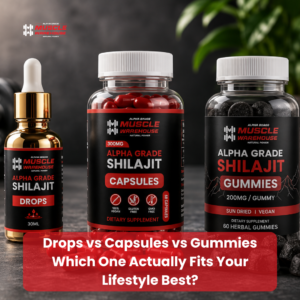
drops vs capsules vs gummies which is better is a common question for people choosing supplements for daily health, energy, and nutrition. Each form has... Continue reading
Travelling with supplements has become common across the UK, especially among people focused on daily wellness and energy support. However, many travellers still ask one... Continue reading

Pure Shilajit post-workout recovery has become a growing topic in the fitness world, especially among gym users, athletes, and individuals focused on performance improvement. In... Continue reading
Introduction What Makes Alpha Grade Shilajit Different from Regular Resin is one of the most important questions buyers ask in 2026 because the Shilajit market... Continue reading